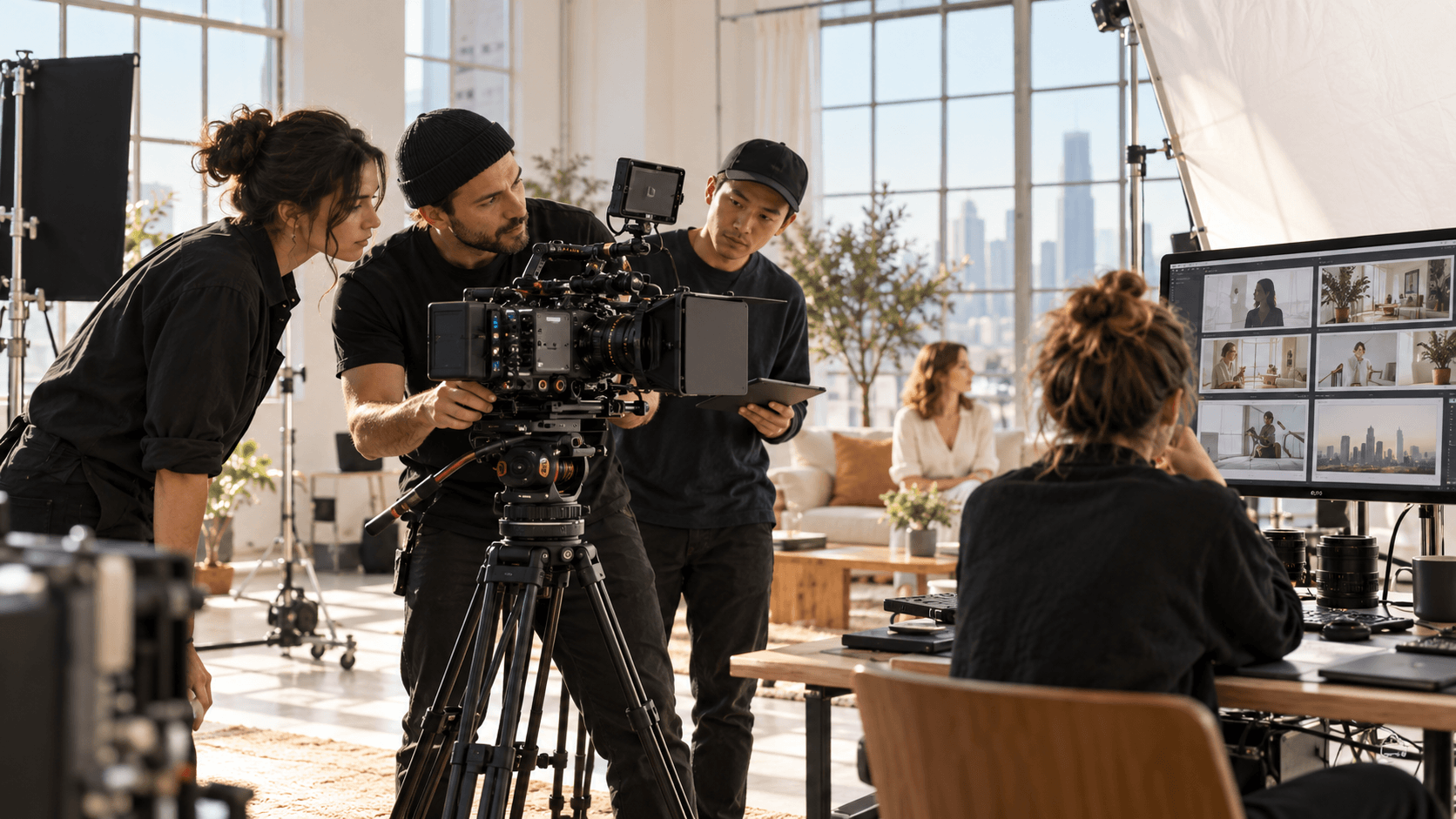
Professional AI Video Production for Businesses: Inside ULTIM’s Creative Process
Explore how ULTIM combines generative AI models, creative direction, and ULTIM Pro to create professional image and video content for business campaigns.
In this guide
- What Is AI Video Production for Businesses?
- The Models Behind AI Images and Video
- What Makes an AI Video Look Professional?
- How ULTIM Takes a Project From Brief to Finished Content
- ULTIM Pro: A Private Enterprise Environment for Generative Work
- Pirelli: Applying Creative Production to an Established Brand
- DPStreet: Connecting Product, Style, and Brand Identity
- When Should a Business Consider AI Video Production?
- Frequently Asked Questions
- Bring Your Next Creative Brief to ULTIM
A tire cuts through a dramatic landscape. A sneaker becomes the centerpiece of an unexpected urban scene. A fashion concept moves from an idea to a visual world that would once have required locations, talent, and a substantial production schedule.
Generative AI is expanding what businesses can imagine and produce. Image and video models give creative teams new ways to explore concepts, develop references, and create footage. Platforms such as Higgsfield bring many of these capabilities into accessible creative environments.
For a business, however, the real question is practical: how do those capabilities become content that represents the brand accurately and supports a clear marketing objective?
Professional AI video production connects the technology with a complete creative process. It involves deciding what to say, designing how to show it, selecting appropriate tools, reviewing the output, and shaping the final edit for its audience.
At ULTIM Marketing, we approach generative production as agency work. Clients bring a business challenge, a product, or a campaign objective. Our team helps translate that brief into a creative direction and carries the project through the production stages agreed for the engagement. Our own platform, ULTIM Pro, adds an enterprise environment to that approach, with ULTIM Studio serving as its creative workspace.
What Is AI Video Production for Businesses?
AI video production uses generative models to create or transform visual material from instructions and references. Depending on the model, those inputs can include text, images, existing footage, and audio. The output becomes material that a creative team can evaluate, develop, and edit.
For businesses, useful applications include product storytelling, campaign concepts, social content, promotional videos, and visual sequences that would be difficult to capture through a conventional shoot alone.
Consider a retailer launching a new sneaker. The team might begin with approved product photographs, develop a setting that fits the campaign, generate a visual reference, and animate a selected composition. The finished piece still needs decisions about pacing, copy, branding, sound, and the call to action.
That is why the production process matters. A visually impressive clip can introduce an incorrect product detail or communicate the wrong message. Professional review makes those issues part of the work, rather than something the client discovers after publication.
The Models Behind AI Images and Video
The generative landscape includes several technologies with different strengths and controls. Understanding their roles helps businesses ask better questions about how their content will be produced.
OpenAI Image Models and Images in ChatGPT
Many businesses encounter image generation through ChatGPT. ChatGPT is the interface; OpenAI’s image models provide the generation and editing capabilities behind that experience. OpenAI also makes image capabilities available to developers through its APIs.
These tools can support visual exploration, reference development, and image editing. In a production workflow, a generated image can help a client evaluate a creative direction before the team develops it further. The image still needs review for product accuracy, composition, and suitability for the intended campaign. OpenAI image generation documentation
Nano Banana: Google’s Image Generation and Editing
Nano Banana is the name associated with Google’s Gemini image generation and editing capabilities. These models support creating images and revising visual material with text and image inputs.
For a creative team, image editing can help explore different environments, treatments, and compositions around a reference. The production challenge is to preserve the elements that matter to the brand while developing the scene. Each revision should be assessed against the approved visual direction, especially when a recognizable product is involved. Google’s Gemini image models
Google Veo: Generative Video
Veo is Google DeepMind’s video generation model family. It offers capabilities for generating moving imagery, with the available inputs, controls, and audio features depending on the version and access route.
A team can explore a scene through a written description or supported visual references, then assess whether the generated motion serves the intended shot. Veo belongs in the conversation because video production requires movement that supports a story: what happens in the frame, how the camera behaves, and how the shot connects with the next moment. Google DeepMind Veo
Seedance: Video With Multimodal References
Seedance is ByteDance’s video generation model family. Its published capabilities include text-to-video and image-to-video generation, while newer versions support additional reference inputs and generation controls.
Those references can help guide the creative task, but they do not eliminate the need to inspect the result. A production team still evaluates continuity, movement, and whether a sequence communicates the planned idea. Model selection follows the requirements of the shot and the capabilities available for the project. ByteDance Seedance
Kling: Image-to-Video and Video Generation
Kling is another generative model family used for image and video work. Its published offering includes text-to-video and image-to-video capabilities, with newer models bringing generation and editing into a multimodal workflow.
For a brand, animating a carefully selected image can be a useful starting point. It gives the creative team a composition to assess before movement is introduced. Once animated, the scene must be reviewed again: a strong still frame does not automatically produce a usable moving shot. Kling’s developer announcements
Choosing the Right Model for the Assignment
These technologies describe the wider production ecosystem. The models available inside a specific platform, or through a complementary production tool, depend on the implementation and service configuration.
At ULTIM, the relevant question is which approach serves the assignment. Some shots benefit from a strong image reference. Others need different motion controls or a different production method. A project may also combine generated material with existing footage, photography, graphics, and conventional editing.
What Makes an AI Video Look Professional?
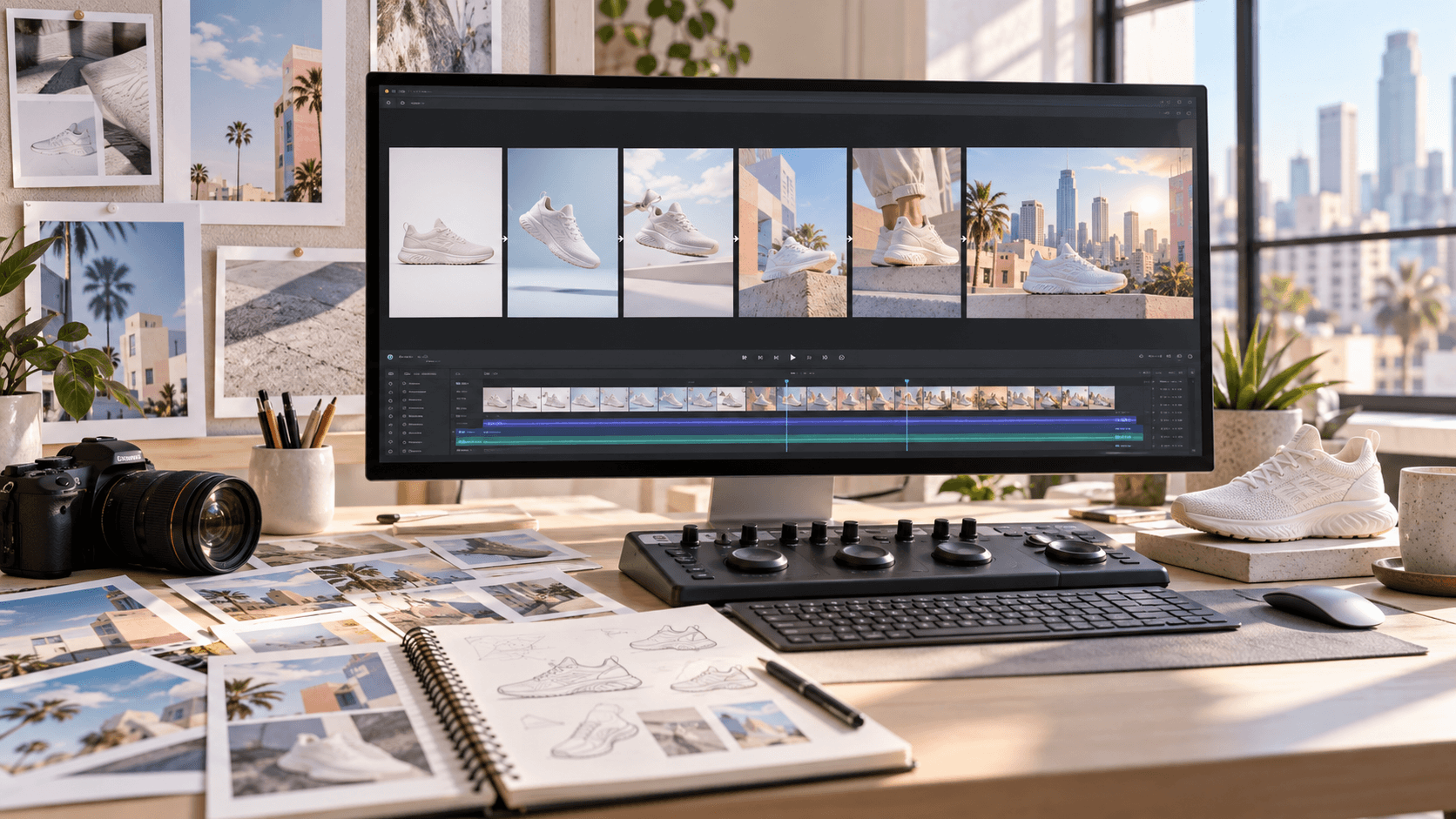
Professional quality begins with intention. The audience should understand what the piece is showing, why the product matters, and what the brand wants them to do next.
A Clear Creative Concept
An effect becomes more useful when it supports a concept. A dramatic transformation might introduce a product. An unexpected setting might express a brand’s personality. A restrained sequence might build trust around an established business.
The concept gives the production team a standard for making decisions. It helps determine which ideas belong in the piece and which impressive possibilities would distract from its purpose.
Product Fidelity
For product-led content, details are consequential. A sneaker’s silhouette, material, color, and logo need attention. An automotive product should be represented in a way that respects its approved appearance and messaging.
Generated material can alter those details. The team needs suitable source assets and a review process that catches errors before delivery. Some scenes require further editing or a different production approach to reach an acceptable result.
Visual Continuity
Sequences feel coherent when their lighting, setting, subject, and visual treatment work together. A change between shots should feel intentional. When generated outputs drift, the team must decide whether to revise the material, change the shot, or restructure the edit.
Continuity is particularly important when several clips need to feel like one campaign rather than unrelated demonstrations of a model’s capabilities.
Editing, Sound, and Delivery
The final video takes shape in the edit. Shot duration, transitions, music, voice, graphics, captions, and brand elements influence how the audience experiences the piece.
Delivery also requires attention to the channel. A vertical social video needs a composition that keeps key information visible on a phone. A wider presentation format may call for different framing and pacing. These choices should be part of the brief, with deliverables defined before production begins.
How ULTIM Takes a Project From Brief to Finished Content
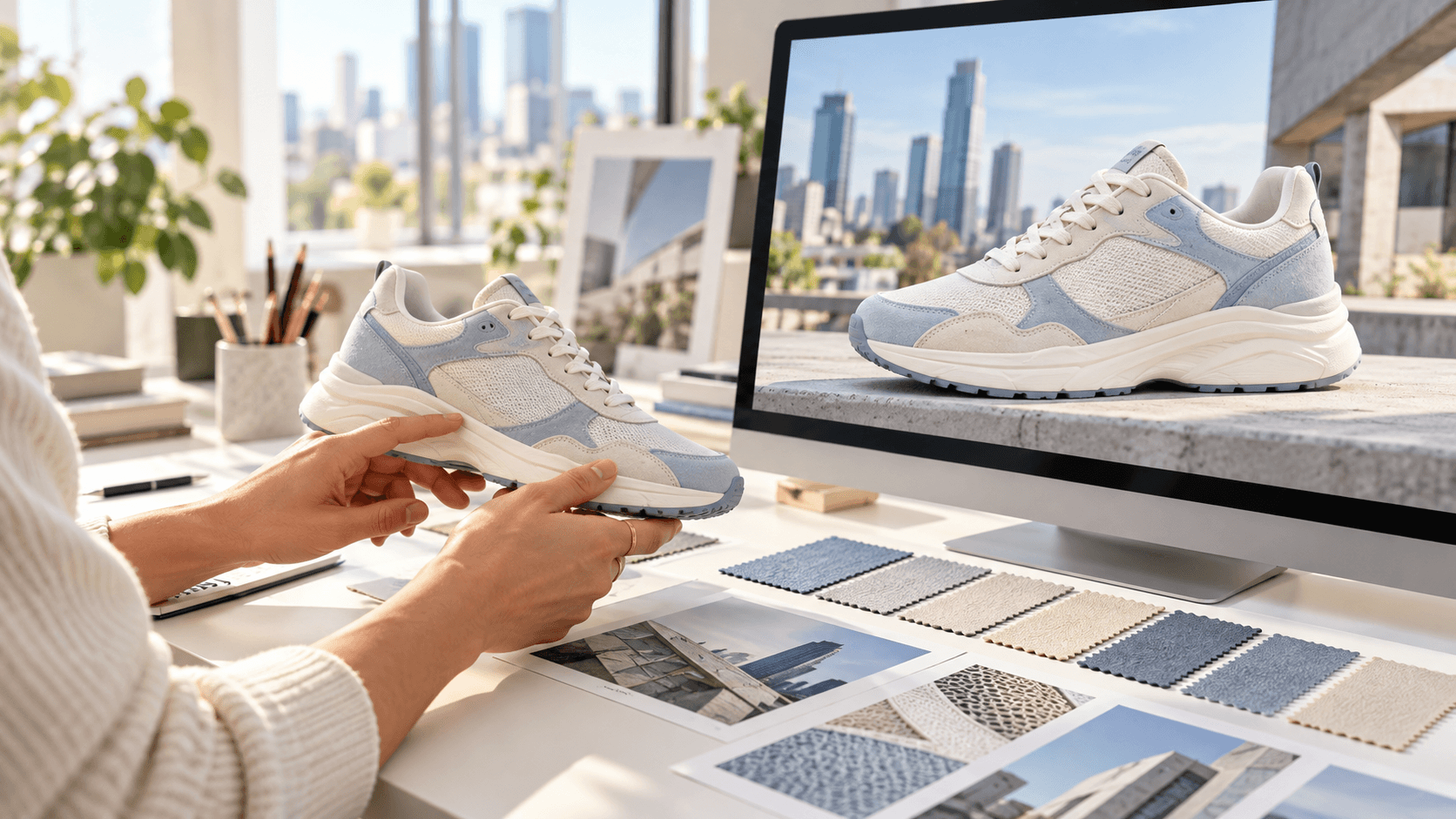
Businesses should know what happens after they share an idea. Our agency approach provides a structured path, with scope, review points, and responsibilities established for each engagement.
1. Understand the Business Objective
We start by identifying the audience, message, intended channel, and desired action. Is the project introducing a product, supporting a seasonal campaign, explaining a service, or building brand awareness?
That objective informs the creative direction. It also prevents production from becoming a collection of attractive scenes with no clear purpose.
2. Establish the Visual Direction
The team develops a concept using the brand’s guidelines, product assets, and campaign context. Depending on the project, this can include a script, shot list, storyboard, or selected visual references.
This stage gives the client a concrete direction to review. It is easier to discuss a composition and narrative than to approve an abstract promise that the finished video will look impressive.
3. Develop References and Generate Material
Approved references guide the production. The team selects appropriate tools, writes instructions, evaluates variations, and develops the material needed for the sequence.
Generation is an iterative stage. Some outputs are useful as delivered; others need revision, editing, or replacement. Creative judgment determines what moves forward.
4. Shape the Edit
Selected shots become a finished piece through editing and the supporting elements included in the scope. The sequence must communicate clearly and maintain the brand’s visual standard.
The team considers how the opening introduces the idea, how the middle develops it, and how the ending gives the viewer a meaningful next step.
5. Review and Prepare the Deliverables
Before delivery, the piece is reviewed against the brief: product representation, messaging, visual consistency, and requested formats. Client approvals and revision rounds follow the agreed process.
The result is a defined production deliverable, supported by people who understand the decisions behind it. Distribution, advertising management, and additional variations can be scoped according to the campaign’s needs.
ULTIM Pro: A Private Enterprise Environment for Generative Work
ULTIM Pro is ULTIM’s platform offering for private enterprise use, available through business licensing arrangements in the United States, Mexico, and Colombia. ULTIM Studio is its creative environment for working with generative image and video capabilities.
The workspace brings practical production controls into the creative process. These include image and video modes, camera configuration, style selection, model and format selection, reference reuse, a prompt bank, and options for saving and downloading assets. Projects provide a way to organize creative work around a brand or assignment.
For a company, that environment can support a more organized relationship between exploration and production. References and instructions become resources that the team can revisit, while creative work remains connected to the project it serves.
The agency relationship adds another layer. Businesses can work with ULTIM to develop the concept, direct production, and review the finished content within the agreed service. The appropriate combination of platform access and agency involvement depends on the company’s team, workflow, and production needs.
Model availability, access permissions, data handling, and licensing terms should be defined for the engagement. Private enterprise use describes the business offering; the exact technical and contractual arrangements belong in the implementation and agreement.
Pirelli: Applying Creative Production to an Established Brand
Work for an established brand requires attention to the product, audience, and visual expectations already associated with its name. The production needs to fit that context while giving the audience a reason to pay attention.
ULTIM’s work for Pirelli provides a concrete example of the agency’s experience producing content for a major automotive brand. View the Pirelli video.
https://www.instagram.com/p/DZK0v03DIdJ/embed/
The broader lesson for businesses is how to approach generative production with a clear brand standard. Creative possibilities should be evaluated against approved product information and campaign objectives. A striking visual deserves its place when it helps communicate the intended message.
You can also explore ULTIM’s Pirelli campaign case study for additional context on the agency’s collaboration with the brand.
DPStreet: Connecting Product, Style, and Brand Identity
Fashion and retail content needs to make the product desirable while preserving its identity. The setting, styling, and presentation should give the audience a sense of how the product belongs in their world.
ULTIM’s work for DPStreet offers another reference for that brand-centered approach. View the DPStreet posts.
https://www.instagram.com/p/DaBVdy7FYgB/embed/
For a generative retail workflow, approved product references are essential. The team can explore compositions and environments while checking the details that make a specific item recognizable. Changes in background or atmosphere should support the product rather than distort it.
Campaign consistency also matters. Several pieces should feel connected through their creative direction, even when the format or setting changes. That requires a team to evaluate the content as a collection, alongside the individual image or clip. Explore the DPStreet content strategy case study for more about ULTIM’s work with the brand.
When Should a Business Consider AI Video Production?
Generative production can be useful when a company needs to explore new creative directions, develop product-led social content, or create visual material beyond the practical reach of its existing assets.
It is also worth considering when the team has a clear campaign objective but needs help translating it into an audiovisual concept and finished production.
The decision should follow the brief. Conventional filming remains valuable when a project needs to capture a real event, location, person, or product demonstration. A hybrid approach can combine that material with generative elements where they serve the concept.
Businesses should assess the total work involved: reference preparation, generation, revision, editing, review, and delivery. The useful comparison is the complete production approach and the quality of the finished asset for its intended purpose.

Frequently Asked Questions
Which AI models are used to generate images and videos?
The ecosystem includes OpenAI image models, Google’s Nano Banana and Veo, ByteDance’s Seedance, and Kling, among others. Image models and video models serve different tasks. The tools selected for a project depend on its creative requirements and the capabilities available through the platform or production workflow.
Do I need to know how to write prompts to work with ULTIM?
For an agency-led project, you can begin with your objective, product assets, and brand information. ULTIM helps translate that material into a creative direction and production instructions. The level of collaboration, platform access, and hands-on support is established in the project scope.
Can AI videos accurately represent my products?
They can support product-led production, but accuracy requires suitable references and review. Generated outputs may change logos, proportions, materials, or details. A professional workflow evaluates those elements and revises or replaces material that does not meet the approved standard.
What is ULTIM Pro?
ULTIM Pro is ULTIM’s private enterprise platform offering, with ULTIM Studio providing its creative environment. Business licensing is offered in the United States, Mexico, and Colombia. The engagement defines the available features, model access, support, and applicable terms.
Can the finished content be delivered for different channels?
Yes, a project can include deliverables for different placements and formats. Those requirements should be established in advance because framing, pacing, captions, and graphics may need adaptation. The number of versions and the channels they support form part of the agreed scope.
Can AI production be combined with existing footage or photography?
Yes. A hybrid production can bring together approved photographs, existing video, generated material, and motion graphics. The creative direction determines where each element belongs. This can be especially useful when a company already has valuable assets that should remain central to the campaign.
Bring Your Next Creative Brief to ULTIM
The opportunity in generative production is to create content that expresses your brand with greater creative range. Getting there requires a clear idea, appropriate technology, and people who know how to develop the material into a finished piece.
ULTIM brings those elements into an agency relationship, supported by its own enterprise platform and creative workspace. Whether your next project centers on a product launch, a retail campaign, or a new visual direction, the starting point is a focused conversation about what your business needs.
Explore our video production services and AI products and solutions, or book a discovery meeting to discuss your next production.
